


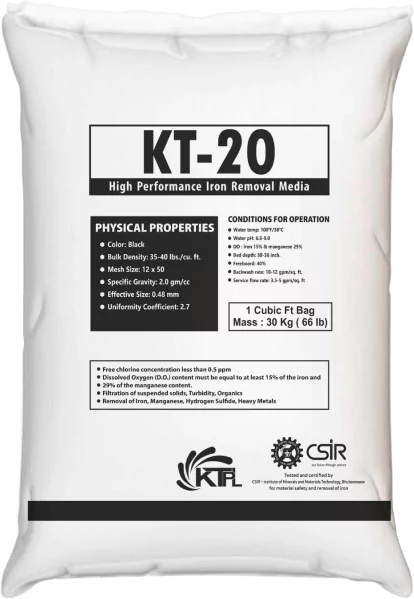
KT-20™
High Performance Iron Removal Media
KT-20 is an efficient and high performance media for the reduction of dissolved iron and manganese compounds from raw water supplies. It may be used in either gravity fed or pressurized water treatment systems. KT-20 filter media acts as an insoluble catalyst to enhance the reaction between dissolved oxygen (D.O.) and the iron compounds. In ground waters the dissolved iron is usually in the ferrous bicarbonate state due to the excess of free carbon dioxide and is not filterable. KT-20, acting as a catalyst between the oxygen and the soluble iron compounds, enhances
the oxidation reaction of Fe++ to Fe+++ and produces ferric hydroxide which precipitates and may be easily filtered.

Technical Data
| Conditions For Operation | |
|---|---|
| Water Temp | 100°F/38°C |
| Water PH | 6.8-9.0 |
| Dissolved Oxygen | 15% of iron & 29% of manganese content |
| Bed Depth | 30 - 40 Inches. |
| Freeboard | 40% |
| Backwash rate | 0.48 mm |
| Freeboard | 2.7 |
| Backwash rate | 10-12 gpm/sq. ft. |
| Service flow rate | 3.5-5 gpm/sq. ft |
| Physical Properties | |
|---|---|
| Color | Black |
| Bulk Density | 1390 Kg/M³ |
| Particle Size | 0.8 - 1.2 mm |
| Specific Gravity | 2.0 gm/cc |
| Effective Size | 0.98 mm |
| Uniformity Coefficient | 1.7 |
Influent And Backwash Limitations
- Free chlorine concentration less than 0.5 ppm
- Hydrogen Sulfide should be removed prior to contact with KT-20 media
- Oil: None Present
- Polyphosphates: None present
Applications
- Under the proper conditions, no chemicals to purchase for maintenance.
- Regeneration not required.
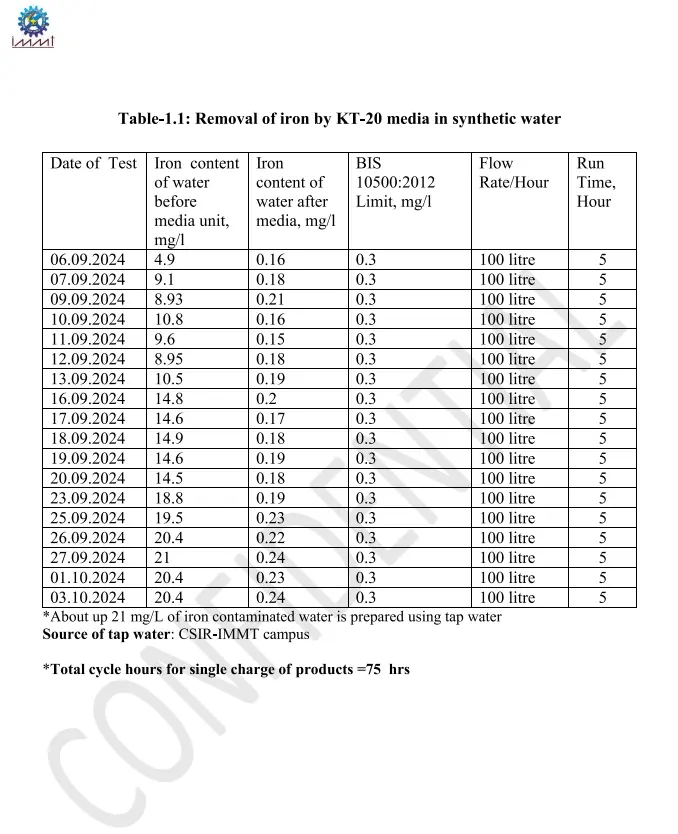
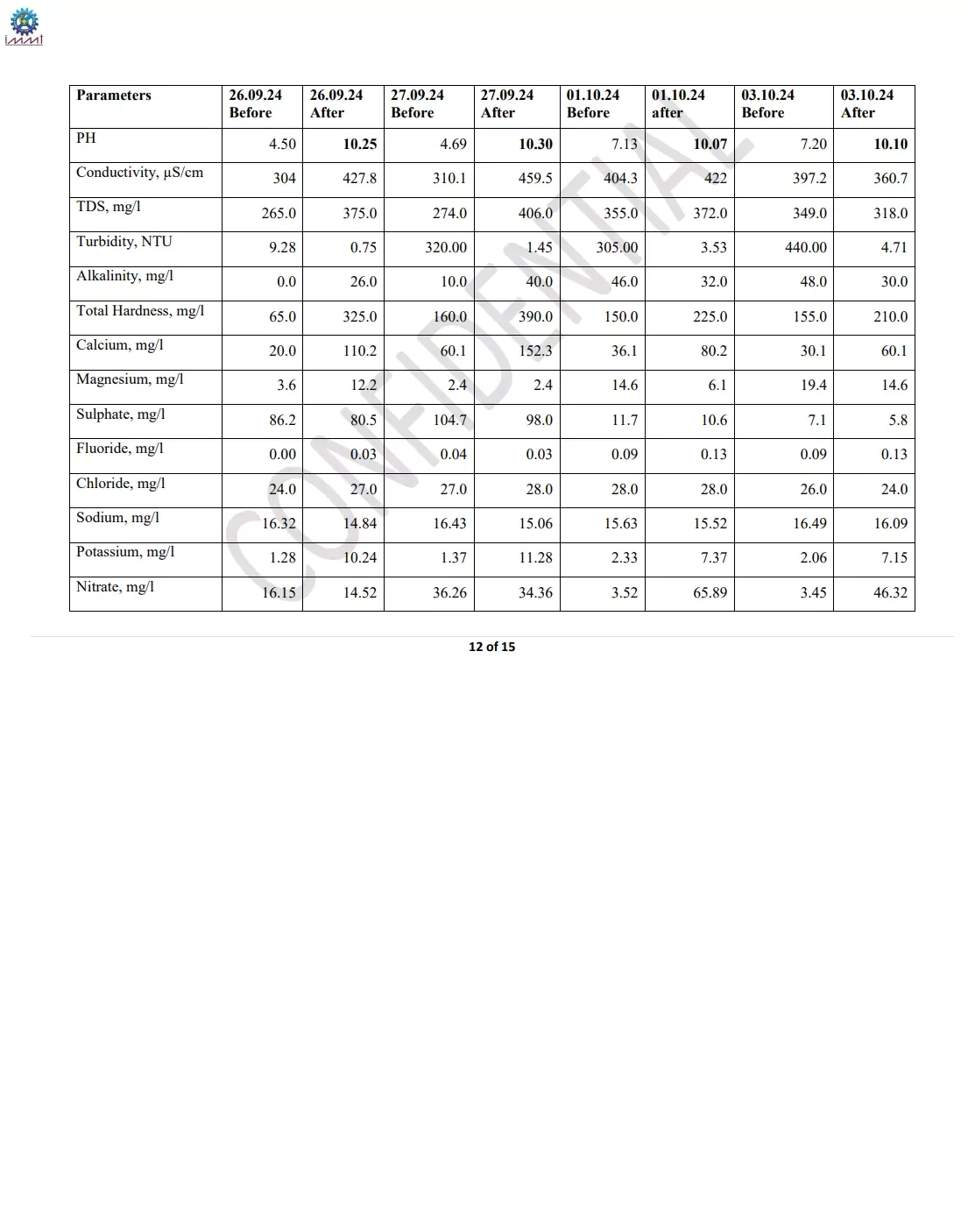
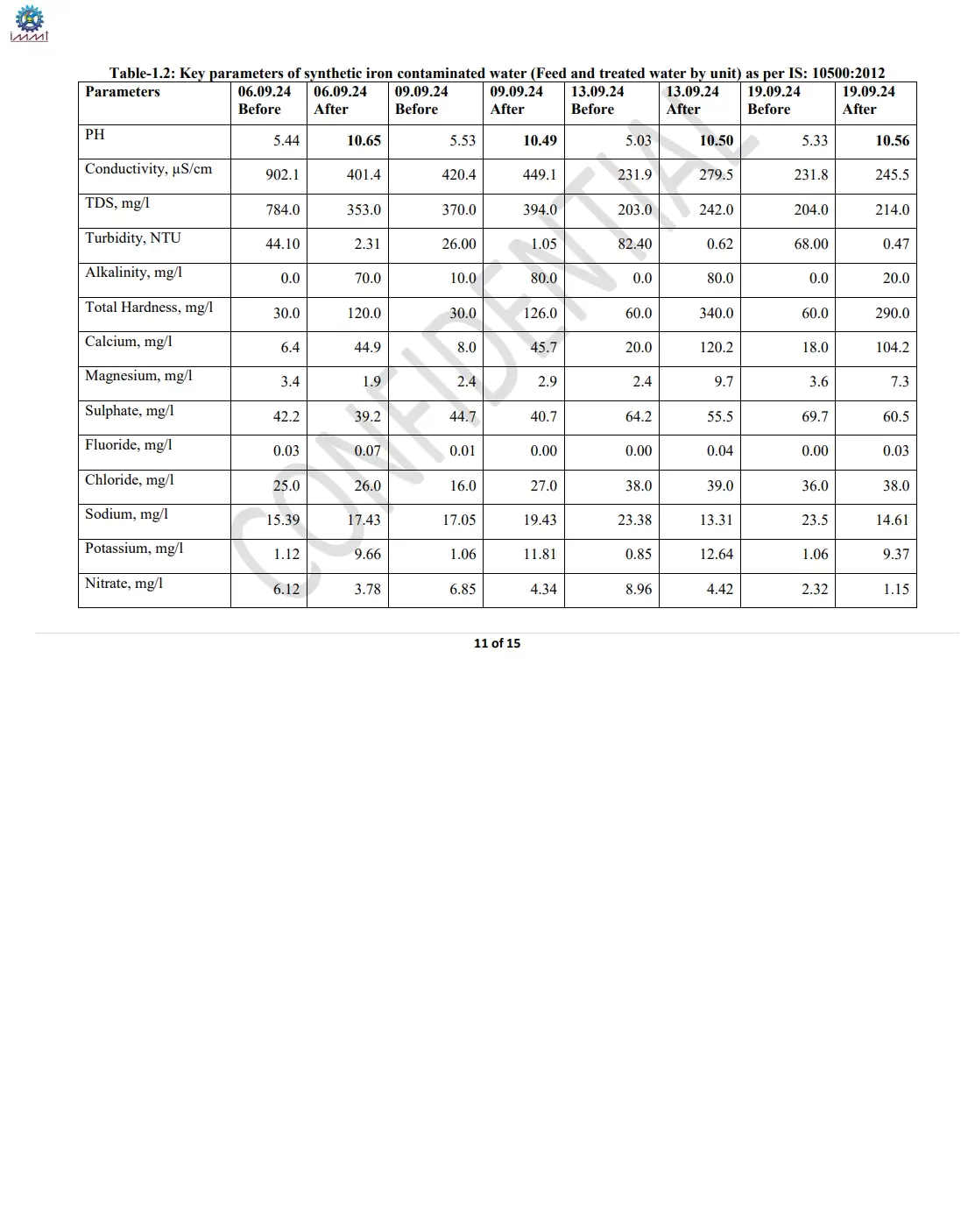
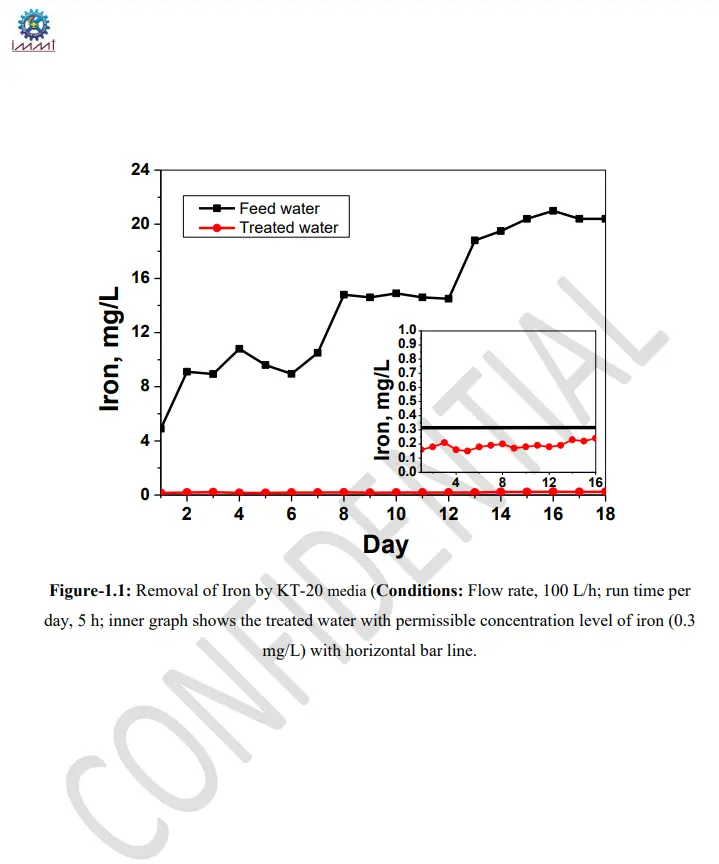
- Iron removal efficiency is extremely high.
- Negligible labor cost: only periodic backwashing required.
- Durable material with a long life and wide temperature range.
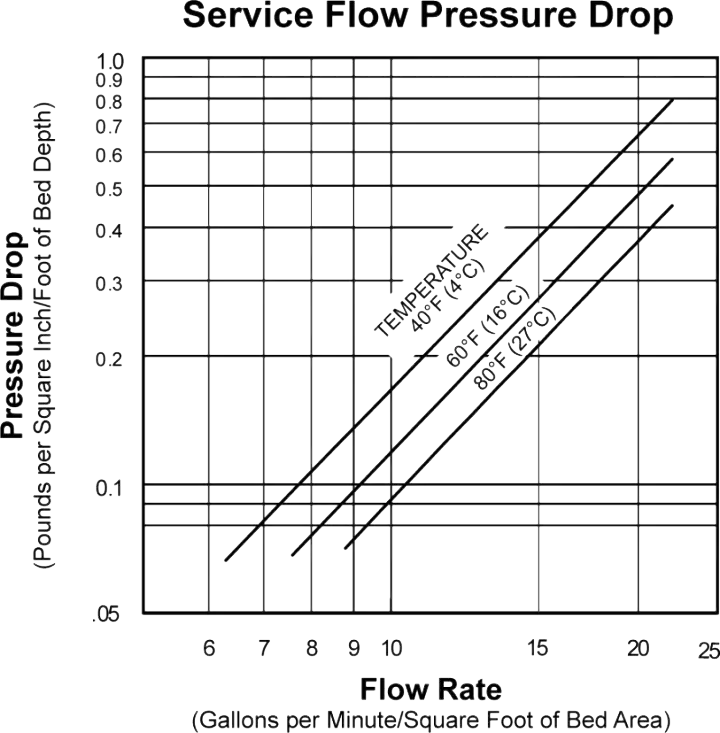
KT-20 Pressure Drop Graph
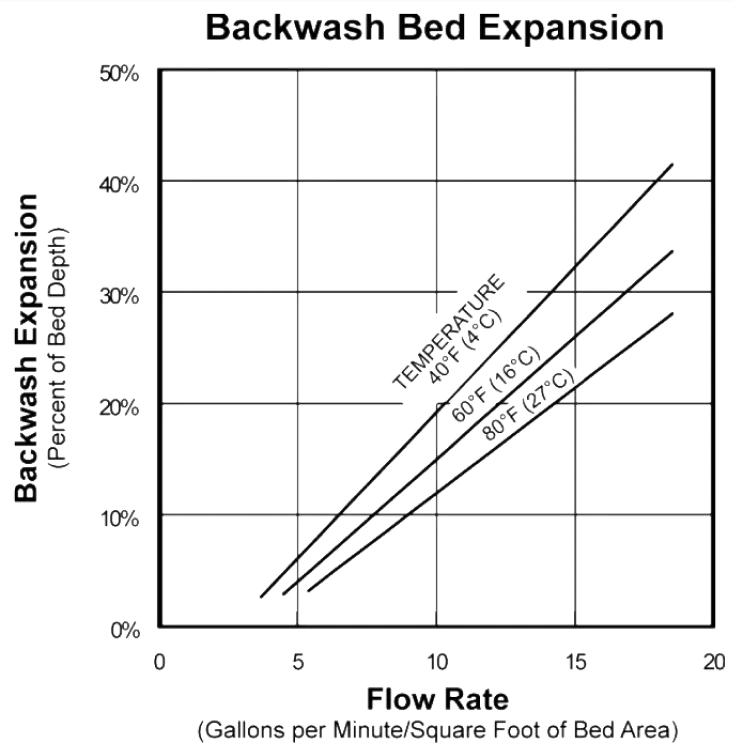
KT-20 ™Backwash Expansion Graph
Advantages
- It can take maximum iron concentrations up to 20 ppm.
- It can reduce iron, Manganese and Hydrogen Sulfide up to < 0.1 ppm
- It complements mixed filters very well, particularly KT-20™ filter media
- High resistance to a variety of chemicals
- Greater physical strength for use in industrial water purification.
- Prevents filtration blockage and more.
- Prevention of mad ball forming at the surface of the sand layer


Frequently Asked Questions
Media filtration is the physical capture of pollutants and adsorption of pollutants through chemical reaction. Commonly, media filtration systems are composed of Treated sand-KT, Manganese Dioxide, Anthracite, or other similar materials. Carbon is also a common media found in these types of filtration systems. Media filters work by having the water pass over and through the media.
The pollutants become trapped in the voids of the media particles and on the surfaces of the media particles. Another way media filtration works is the pollutants are removed through chemical and molecular action, or cation exchange. This process is commonly used in media filters that target nutrient and metal removal. To be as successful as possible in pollutant removal with media filtration, it is important to know the goals in order to select the appropriate media gradation and composition...
- Know what the purpose of each chemical feed is
- Monitor backwashes (or reverse-flow cleaning)
- Clean the media
- Dispose of the media if arsenic or radium is present in the media